Special Project: Soccer Referee Module
Project Overview: Law 12 - Fouls and Misconduct (Direct and Indirect Free Kicks)
This project grew out of a needs analysis conversation with a local experienced referee and referee educator, where I set out to better understand the challenges beginner referees face when applying the Laws of the Game in real matches. During that conversation, direct versus indirect free kicks surfaced as a major point of confusion, especially in fast-paced youth games where decisions need to be made quickly and confidently by referees who often lack experience. Using that insight, I designed a blended learning experience that pairs an online, asynchronous scenario-based module with an in-person field session to help referees move beyond memorization and develop stronger decision-making skills under pressure.
Here are the interview questions and responses: Needs Analysis Interview with Referee Instructor
The purpose of this page is to demonstrate my instructional design process for identifying a real-world problem and creating a blended learning solution to address it.
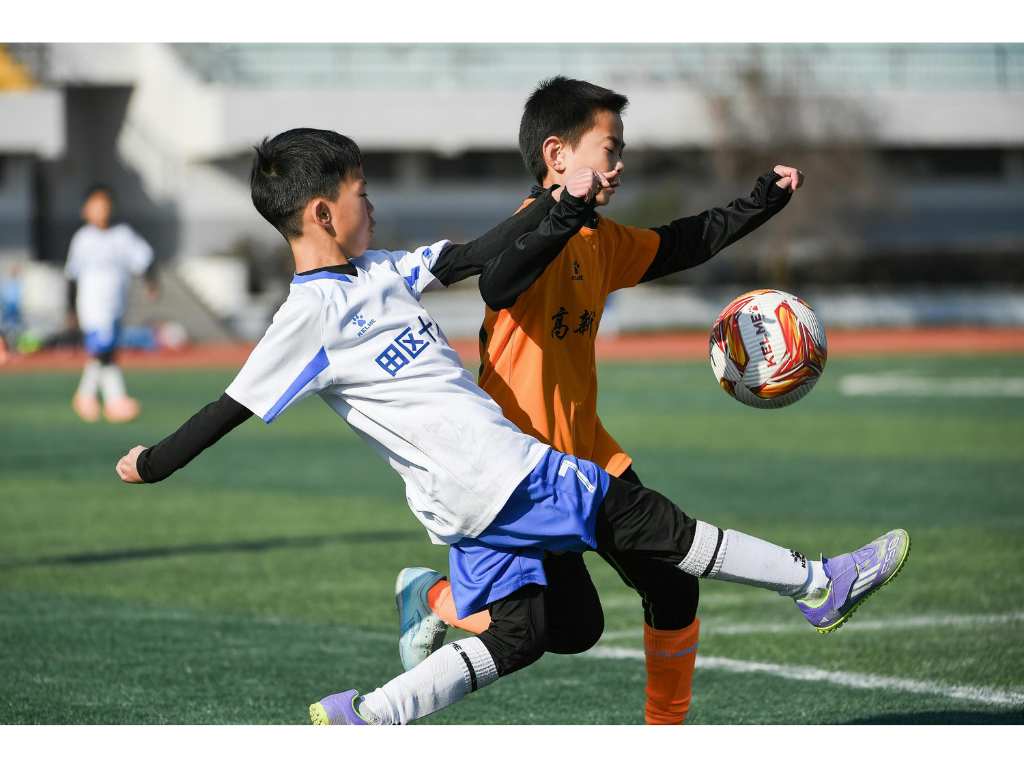
Setting the Stage
This section captures the foundational design work I completed before any content was developed. I created a structured and informed pathway toward the final blended learning product that includes identifying the instructional problem, defining a focused learning scope, and establishing clear learning objectives. This step ensures that all content decisions serve a purpose, are aligned to real performance needs, and are grounded in subject matter expert insight rather than assumptions.
Step 1: Identifying the Instructional Problem Through SME Insight
Through my needs analysis interview with a referee instructor, I identified that beginner referees understand Law 12 conceptually, but struggle to apply it during live matches. Specifically, beginner referees tend to:
Hesitate when distinguishing direct vs indirect free kick offences
Default to mental checklists that break down under pressure
Lose confidence when external pressure (players, coaches, spectators) is present
This gap between knowledge and application leads to delayed or incorrect decisions during youth matches
Step 2: Defining the Learning Focus
To keep the learning experience targeted and practical, the design focuses on only two performance outcomes:
Accurately distinguish direct vs indirect free kick offences using clear decision cues
Make confident restart decisions under pressure
All content, scenarios, and activities are intentionally designed to support these outcomes.
Step 3: Creating the Learning Objectives
By the end of this blended learning experience, beginner referees will be able to:
Identify whether an offence involves contact or no contact
Select the correct restart (direct or indirect free kick)
Maintain decision confidence despite external pressure
Verbally justify their decision using simple, defensible reasoning
Step 4: Understanding the Design Principles
Based on SME insight and referee context, the design will follow these principles:
Decision-based learning over memorization
Simplified cues over long checklists
Youth match examples (not professional)
Storyboarding the Module
Before creating any content, I mapped out the full blended learning experience to clarify what will be built, how each piece works together, and what role each component plays in supporting referee decision-making. This storyboard was used to plan the introductory information, scenario practice, and the field session before any development began. At this stage, the plan would be reviewed with a subject matter expert or supervisor to confirm the approach and make adjustments as needed. This ensures time and resources are used effectively before moving into content creation.
Storyboard Overview
Introductory Information
Tool: Articulate Rise
Audience: Referees
Purpose: Establish Law 12 decision foundations through structured content, interactive classification, and scenario-based restart selection.
Scenario Practice
Tool: Articulate Storyline
Audience: Referees
Purpose: Practice restart decisions
Field Session Plan
Tool: Microsoft Word
Audience: Instructors
Purpose: Structured plan to apply decisions in live contexts
Component 1: Introductory Information (Articulate Rise)
Purpose:
Establish a clear, practical foundation for understanding and applying Law 12 by helping referees quickly distinguish between direct and indirect free kick offences.
What This Section Covers:
This introductory section translates the language of Law 12 as it relates to direct vs indirect free kicks into something that referees can use in real time. Rather than listing every offence, the content emphasizes the core distinction the law requires referees to make on the field:
Did the offence involve contact or no contact?
Was the contact careless, reckless, or excessive?
Does the situation require a direct or indirect free kick?
Key Elements:
Plain language explanation of:
Direct free kick offences as actions involving contact against an opponent
Indirect free kick offences as actions involving no contact, dangerous play, or technical offences
Clarification of how contact drives the restart decision under Law 12
Youth-specific visual examples that reflect how fouls actually appear at lower levels
Simplified decision framing to reduce reliance on long mental checklists
Progressive classification and restart decision checks to reinforce recognition and application.
Component 2: Scenario Practice (Articulate Storyline)
Purpose:
Give referees repeated, realistic practice applying Law 12 by making restart decisions in situations that mirror youth matches.
What This Section Covers:
This component moves referees from understanding Law 12 conceptually to applying it in motion. The scenarios are designed to reflect how direct and indirect free kick decisions actually present themselves on the field, where contact may be subtle, player technique is inconsistent, and decisions must be made quickly.
Each scenario requires referees to identify whether an offence involved contact or no contact and commit to the appropriate restart without relying on long mental checklists.
Scenario Design Approach:
Scenarios are built around:
Common youth-match situations, not professional examples
Fouls and non-fouls that are often misclassified
Moments where hesitation commonly occurs
Law 12 distinctions that are technically correct but difficult to see in real time
Sample Scenario Flow:
U12 match in the midfield. Attacker dribbles laterally. Defender steps across path.
Learner Action: Observe play
Feedback Focus: Establish realistic match context
Attacker slows to avoid collision. No physical contact occurs.
Learner Action: Select restart: Direct FK/ Indirect FK/ Play On
Feedback Focus: Identify contact vs no contact
Learner commits to a restart
Learner Action: Decision locked in
Feedback Focus: Reinforce decisiveness
Feedback is displayed
Learner Action: Review explanation
Feedback Focus: Why impeding without contact is an indirect free kick
Follow-up prompt: “What would make this a direct free kick?”
Learner Action: Select condition (multiple choice)
Feedback Focus: Reinforce Law 12 (contact)
Pressure element added (coach/fan/player reactions)
Learner Action: Reflect on confidence
Feedback Focus: Reinforce decision commitment
Component 3: Field Session Plan (Microsoft Word)
Audience:
Referee instructors only
Purpose:
Translate online decision-making practice into physical movement, positioning, and live match awareness.
What This Section Does:
The field session reinforces the same Law 12 decision cues introduced online, allowing referees to apply them while moving, managing space, and handling real-time pressure. The focus remains on restart decisions.
Field Session Structure:
Live recognition activities
Instructor Focus: Demonstrate contact vs no contact
Referee Outcome: Faster restart identification
Small-sided scenarios
Instructor Focus: Observe restart selection
Referee Outcome: Increase consistency
Pressure stimulation
Instructor Focus: Add mock verbal and situational pressure
Referee Outcome: Decision confidence
Debrief and simplification
Instructor Focus: Reinforce key cues
Referee Outcome: Reduce overthinking
Content Creation
Once the storyboard was reviewed and approved, I would move into content development with a clear plan already in place. Because the instructional structure, scenarios, and alignment between online and field learning were defined upfront, content creation focuses on execution rather than reworking decisions mid-build. This section includes samples of each component of the blended learning experience.
⚠️This section is still under construction⚠️
Component 1 - IFAB Law 12: Direct and Indirect Free Kicks
This self-paced Articulate Rise module introduces a practical framework for applying Law 12 in youth matches. The module focuses on the key decision that drives restart selection: whether contact occurred. From that starting point, referees learn to distinguish between direct and indirect free kicks, classify challenges as careless, reckless, or excessive, and identify common offences that result in indirect free kicks, which involve no contact or technical violations.
Learners engage with sorting activities, matching exercises, video examples, and text-based match scenarios that require restart selection. The module concludes with a series of youth match decisions designed to reinforce consistent application Law 12 before transitioning to video-based practice in the next component.
Component 2 - Scenario-Based Practice
Placeholder text
Component 3 - Field Session Materials
Placeholder text