Interactive Learning Experiences
This page highlights a collection of interactive learning experiences designed and built using Articulate Storyline and Rise. The examples showcase scenario-based modules, guided tutorials, and concept-driven lessons that combine clear instructional content with learner interaction, knowledge checks, and visual support.
These projects demonstrate my approach to designing engaging, accessible learning experiences that help learners actively process information, practice skills, and apply concepts through structured, interactive activities.
Articulate Storyline Modules
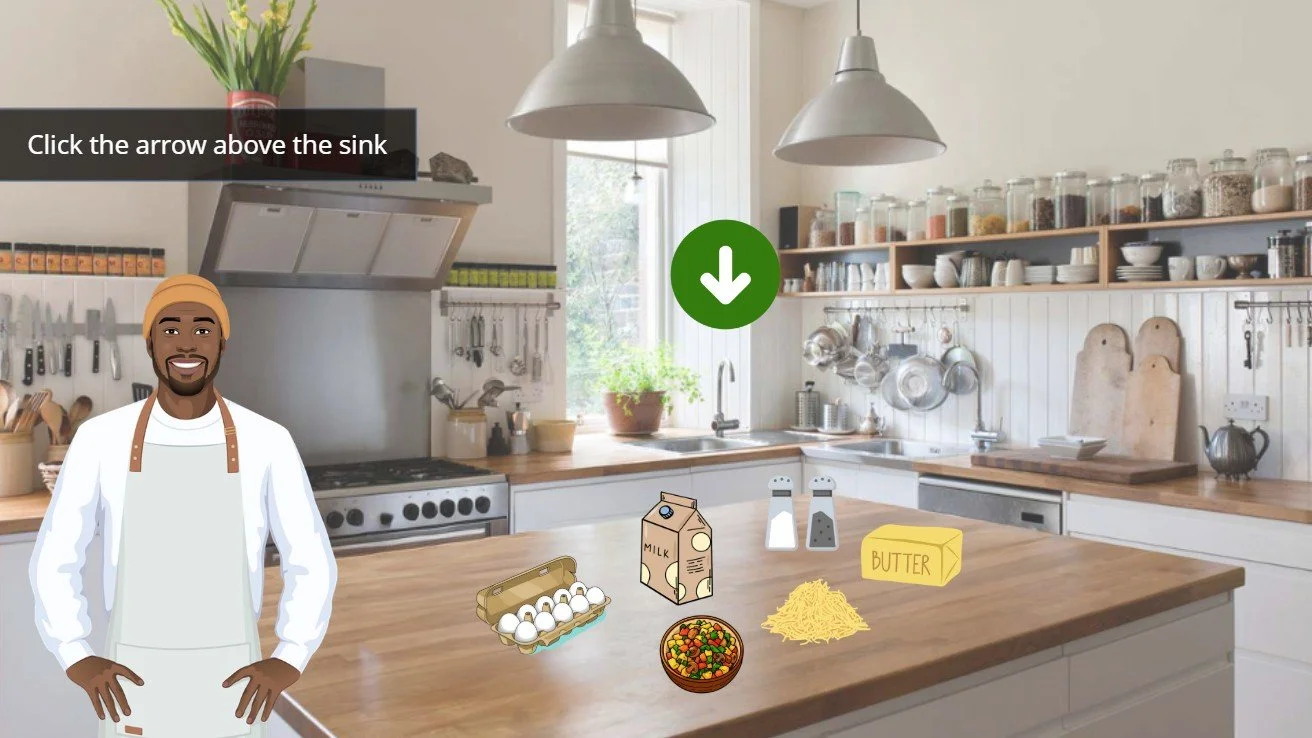
Cooking Up a Delicious Omelet
This module is an interactive, step-by-step tutorial that guides learners through the process of making an omelet. Users actively complete each stage by clicking, dragging, and answering knowledge-check questions, from washing hands and selecting ingredients to cooking and plating the omelet, with immediate feedback and accessibility features that support learning by doing rather than passive instruction.
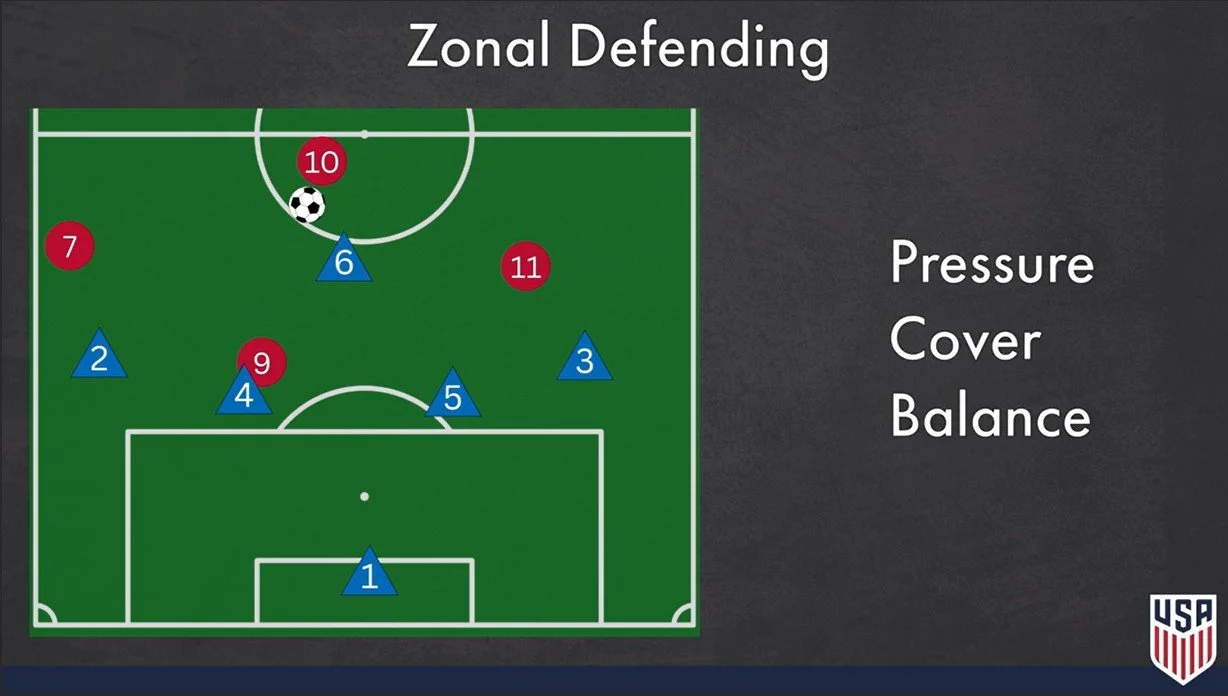
Zonal Defending: Understanding Pressure, Cover, and Balance
This demo introduces the key principles of zonal defending, with a focus on compactness and collective movement as a unit. Learners progress through short instructional slides and interactive knowledge checks that ask them to identify core defending principles and evaluate statements about effective pressure, reinforcing understanding through immediate feedback and simple decision-based interactions.
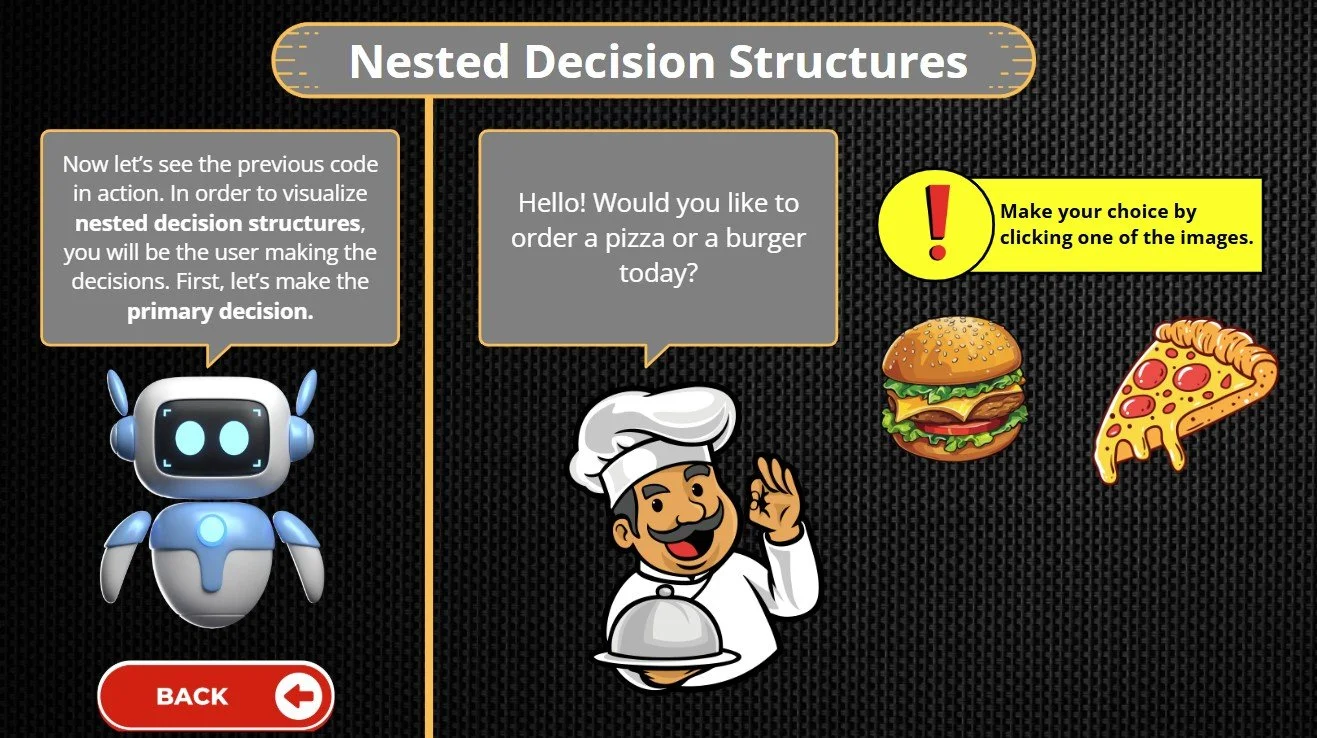
Nested Decision Structures & the if-elif-else Statement
This module introduces computer science students to nested decision structures and the if-elif-else statement through a combination of guided instruction and interactive scenarios. Learners explore concepts step by step, then apply them by making choices in simulated situations (such as ordering food or entering a test score), allowing them to see how different inputs trigger different outcomes and reinforcing how conditional logic works in practice.
Articulate Rise Modules
Exposure Triangle
This module introduces learners to the fundamentals of photography by explaining the Exposure Triangle and how aperture, shutter speed, and ISO work together to control light and image quality. Learners move through clearly structured content, visual diagrams, and examples to understand how adjusting each setting affects brightness, depth of field, motion blur, and image noise, helping them build a practical foundation for making intentional camera decisions rather than relying on automatic settings.

Introduction to Simple Syllabus
This module introduces instructors to Simple Syllabus and walks them through the process of creating, editing, and publishing a course syllabus directly within Canvas LMS. Learners are guided step by step through accessing Simple Syllabus, editing course-specific components, reordering or adding sections, and submitting the syllabus for student view, with clear visuals and explanations that help faculty understand both the tool’s functionality and institutional expectations.
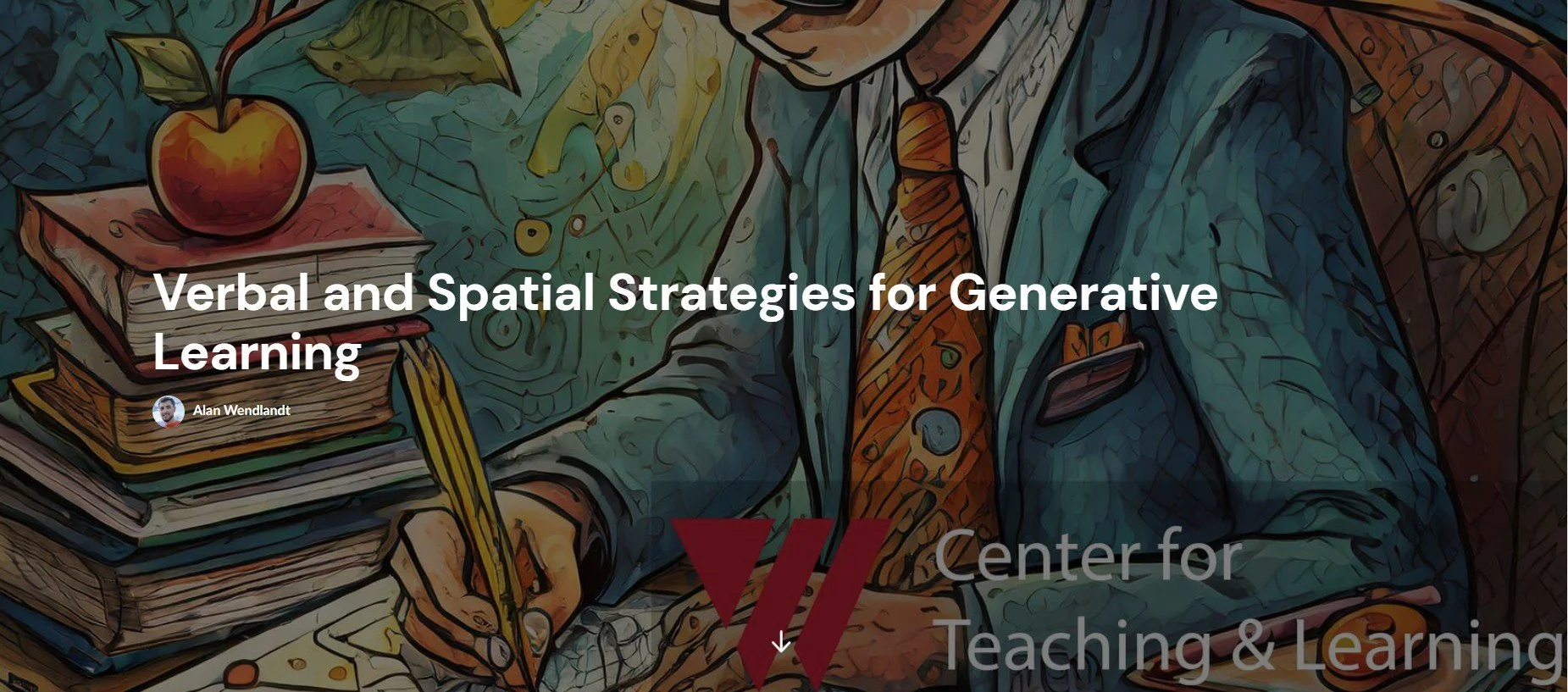
Verbal and Spatial Strategies for Generative Learning
This module introduces faculty to the concept of generative learning and explores research-backed verbal and spatial strategies that help students actively construct understanding. Learners move through clearly organized content that explains strategies such as summarizing, self-testing, self-explaining, teaching, mapping, drawing, imagining, and enacting, and then engage in interactive matching activities to reinforce how each strategy supports learning, along with practical considerations for implementing them effectively in instruction.